Semantic Features Analysis
|
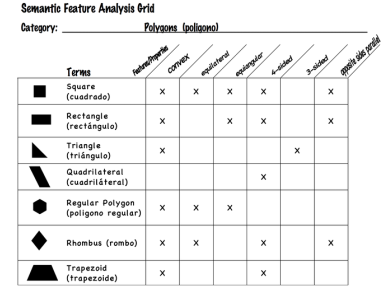
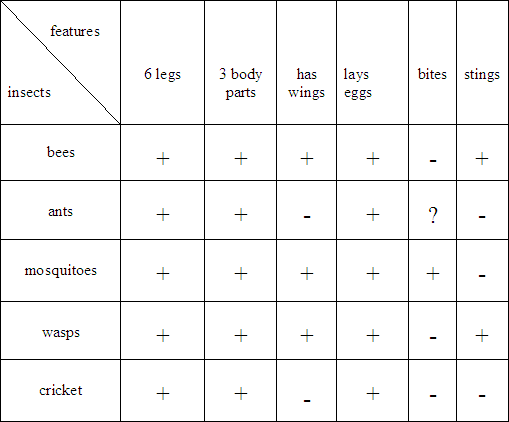
Semantic Feature Analysis is a vocabulary strategy that uses a grid to help students explore the interrelationship of terms. While students are actively completing the grid and analyzing its results, students are able to identify relationships, make predictions, and master important concepts.
Why use this strategy? One reason is because it provides a visual representation of the similarities and differences of each term. It also enables students to see what sets it apart from those other words. Another reason is that it can be used with the whole class, small groups, or individually. Additionally, teachers are able to monitor each student's grid and understand what students know about the topic allowing teachers to tailor instruction accordingly. According to page 19 of Dr. Mimi Miller and Nancy Veatch in their 2011 book entitled Literacy in Context (LinC): Choosing Instructional Strategies to Teach Reading in Content Areas for Students Grades 5-12, "Semantic Feature Analysis can be used before, during, and after instruction. Before beginning the reading of a passage, the teacher might introduce the terms and find out what students already know. The initial “+” and “-” marks can be written in one color. Then, during or after reading a section of text, students can come back to the chart and revisit their evaluation of the features. After reconsidering, some might be changed from “-” to “+”, and vice-versa. These new, revised marks can be made in a different color. " |
|
Miller and Veatch's 2011 Guide to:
Creating a Semantic Features Analysis Grid
1. Identify concepts and/or terms to be learned and the features of these concepts that can be used to compare them.
2. Create a chart that lists the concepts down the left-hand side and the features across the top.
3. Guide students through a discussion of each concept. As each feature is considered, decide
whether the concept exemplifies that feature (+) or does not exemplify that feature (-).
4. Use the chart to explore the concepts further, generate questions, and conduct research.
2. Create a chart that lists the concepts down the left-hand side and the features across the top.
3. Guide students through a discussion of each concept. As each feature is considered, decide
whether the concept exemplifies that feature (+) or does not exemplify that feature (-).
4. Use the chart to explore the concepts further, generate questions, and conduct research.
Examples and Resources
Examples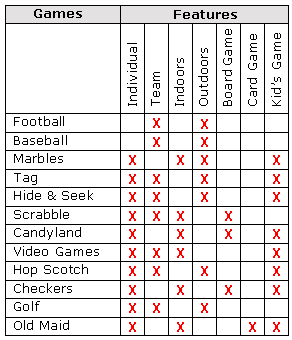
Language Arts Example
- Using Folk Tale, Rough-Face Girl High School Math - Geometry Lesson Middle School Math Example - Using Whole Numbers Science Example - Using Dinosaurs Social Studies Example - Graphic Using Presidents |
ResourcesSemantic Features Analysis
YouTube explanation created by student Semantic Features Analysis Template In PDF Reading Rockets Detailed with examples Reading Educator Steps to Creating Science Lesson Great for ELL students |
Resources
AEA 267. (2015). Semantic Features Analysis for Geometry. Retrieved from https://www.aea267.k12.ia.us/system/assets/uploads/files/80/geometry_example.pdf
Arizona Department of Education. (2015). Retrieved from http://www.azed.gov/english-language-learners/files/2014/02/semantic-feature-analysis-lesson.pdf
Florida Center for Instructional Technology. (2013). Semantic Feature Analysis. Retrieved from http://fcit.usf.edu/fcat8r/home/references/additional-reading-strategies/semantic-feature-analysis.html
Houghton, L. (2013). Frayer model math. Retrieved from http://district.bluegrass.kctcs.edu/lori.houghton/qep/FrayerModelMath.PNG
Johnson, A. J. (2014). Semantic feature analysis. Retrieved from https://www.youtube.com/watch?v=OuzXbv89fgU
Jones, R. (2012). Semantic feature analysis. Retrieved from http://www.readingquest.org/strat/sfa.html
Miller, M., & Veatch, N. (2011). Literacy in context (LinC): Choosing instructional strategies to teach reading in content areas for students grades 5-12. Boston: Pearson.
Oxner, S. (2014). 1st Strategy Semantic Feature Analysis. Retrieved from https://www.youtube.com/watch?v=W9ziZ8GH8ms
Paulson, A. (2013). Semantic feature analysis. Retrieved from http://www.cehd.umn.edu/DHH-resources/Language/SemanticFeatureAnalysis.html
Reading Educator. (2014). Semantic feature analysis. Retrieved from http://www.readingeducator.com/strategies/analysis.htm
Reading Rockets. Retrieved from http://www.readingrockets.org/strategies/semantic_feature_analysis
AEA 267. (2015). Semantic Features Analysis for Geometry. Retrieved from https://www.aea267.k12.ia.us/system/assets/uploads/files/80/geometry_example.pdf
Arizona Department of Education. (2015). Retrieved from http://www.azed.gov/english-language-learners/files/2014/02/semantic-feature-analysis-lesson.pdf
Florida Center for Instructional Technology. (2013). Semantic Feature Analysis. Retrieved from http://fcit.usf.edu/fcat8r/home/references/additional-reading-strategies/semantic-feature-analysis.html
Houghton, L. (2013). Frayer model math. Retrieved from http://district.bluegrass.kctcs.edu/lori.houghton/qep/FrayerModelMath.PNG
Johnson, A. J. (2014). Semantic feature analysis. Retrieved from https://www.youtube.com/watch?v=OuzXbv89fgU
Jones, R. (2012). Semantic feature analysis. Retrieved from http://www.readingquest.org/strat/sfa.html
Miller, M., & Veatch, N. (2011). Literacy in context (LinC): Choosing instructional strategies to teach reading in content areas for students grades 5-12. Boston: Pearson.
Oxner, S. (2014). 1st Strategy Semantic Feature Analysis. Retrieved from https://www.youtube.com/watch?v=W9ziZ8GH8ms
Paulson, A. (2013). Semantic feature analysis. Retrieved from http://www.cehd.umn.edu/DHH-resources/Language/SemanticFeatureAnalysis.html
Reading Educator. (2014). Semantic feature analysis. Retrieved from http://www.readingeducator.com/strategies/analysis.htm
Reading Rockets. Retrieved from http://www.readingrockets.org/strategies/semantic_feature_analysis

